
Severe Toothache
Persistent or severe tooth pain may be associated with decay, inflammation, infection or damage to the tooth. Assessment helps determine the appropriate next step.
Sudden tooth pain, swelling, a broken tooth or a dental injury can be difficult to manage. We provide careful assessment and timely dental care to identify the cause and help you get comfortable again.
Explore Emergency Care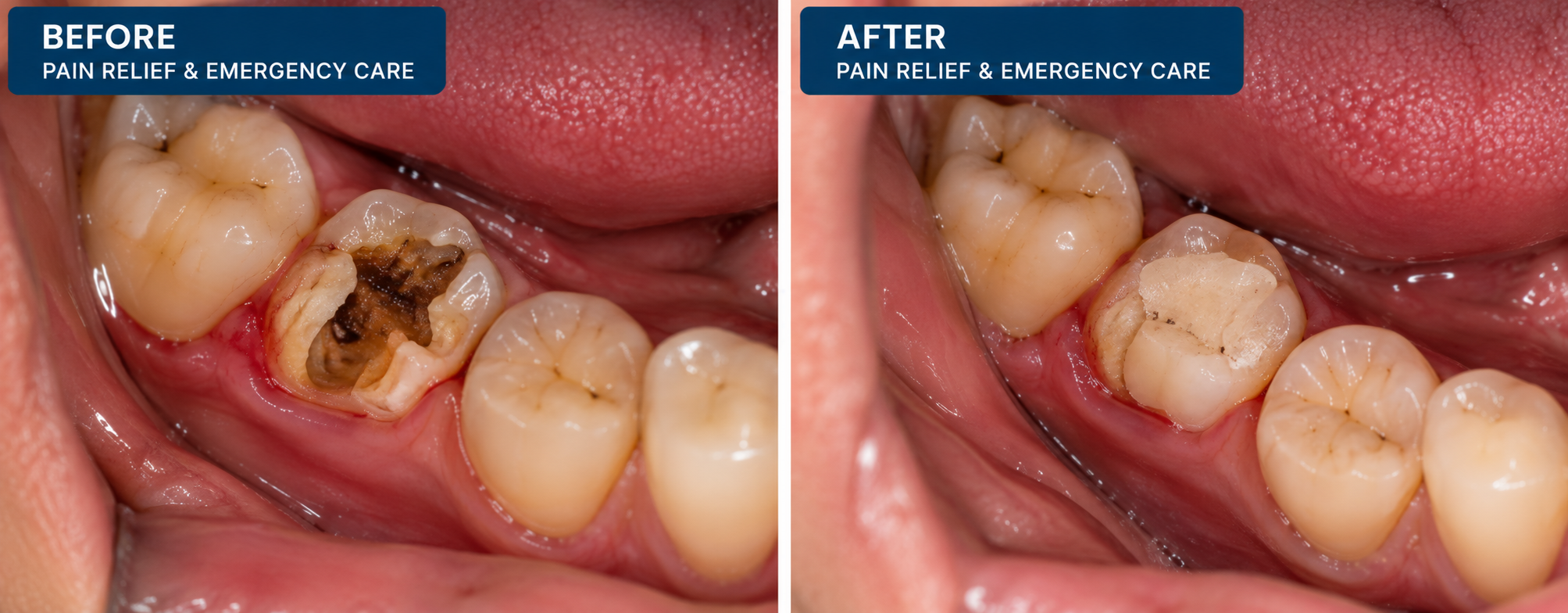
Dental pain can have many causes, from decay and infection to a damaged filling, cracked tooth or inflammation around the gums.
Rather than simply masking the discomfort, our approach begins with identifying what is causing the problem and determining the appropriate treatment.
Prompt assessment can help determine the cause of your symptoms and prevent a dental problem from becoming more complicated.
Persistent or severe tooth pain may be associated with decay, inflammation, infection or damage to the tooth. Assessment helps determine the appropriate next step.
Swelling around a tooth, gum or face can require prompt dental assessment, particularly when accompanied by significant pain or other symptoms.
A fractured or damaged tooth can expose sensitive structures and make chewing uncomfortable. Treatment depends on the extent and location of the damage.
A lost filling or crown can leave the tooth vulnerable and may cause sensitivity or discomfort. Timely evaluation can help protect the tooth.
Accidents or injuries can affect teeth, gums and surrounding structures. Prompt examination helps determine the extent of the injury.
New or intense sensitivity to hot, cold or pressure may indicate an underlying dental problem that needs assessment.
Simple precautions may help you stay more comfortable until your dental assessment.
Continue gentle brushing and oral hygiene around the affected area without causing unnecessary irritation.
If the tooth is sensitive, avoid foods and drinks that clearly trigger or worsen the discomfort.
If chewing is painful, softer foods may reduce pressure on the affected tooth.
Temporary improvement in pain does not necessarily mean that the underlying dental problem has resolved.
Emergency care is not only about relieving discomfort. It is about understanding what has happened and choosing treatment based on the clinical situation.
We begin by understanding your symptoms, concerns and dental history.
Examination and appropriate diagnostic methods help determine what may be causing the problem.
We explain the findings and discuss the treatment options relevant to your situation.
Where possible, treatment is planned with the goal of preserving healthy natural tooth structure.
Arrange a dental assessment so that the cause of the pain can be identified. Until then, avoid anything that clearly worsens the discomfort and keep the area clean.
No. Dental pain can have several causes. A clinical examination is needed to determine the source of the symptoms and whether root canal treatment or another treatment is appropriate.
Avoid chewing on the affected side and arrange an examination. The appropriate treatment depends on how much of the tooth has been damaged and whether deeper structures are involved.
Keep the area clean, avoid unnecessary pressure on the tooth and arrange a dental assessment. Bring the dislodged restoration with you if it is available.
Swelling can be a sign of an underlying dental problem and should be assessed promptly. If swelling is severe or affects breathing or swallowing, seek urgent medical care immediately.
In some situations, timely treatment may allow a natural tooth to be preserved. The possibilities depend on the condition of the tooth and surrounding tissues.
Book an assessment so we can understand the problem and discuss the appropriate treatment for your situation.